
Anthropic, Google, and OpenAI are engaged in an «autumn AI race»: tech giants are simultaneously developing new models. The companies are focusing on creating neural networks for programming, scientific research, and cybersecurity, as reported by The Wall Street Journal. Anthropic has already unveiled Claude Fable 5.1 and Claude Mythos 5.1, while Google released Gemini 3.8 Flash Cyber. OpenAI is currently preparing Astra.
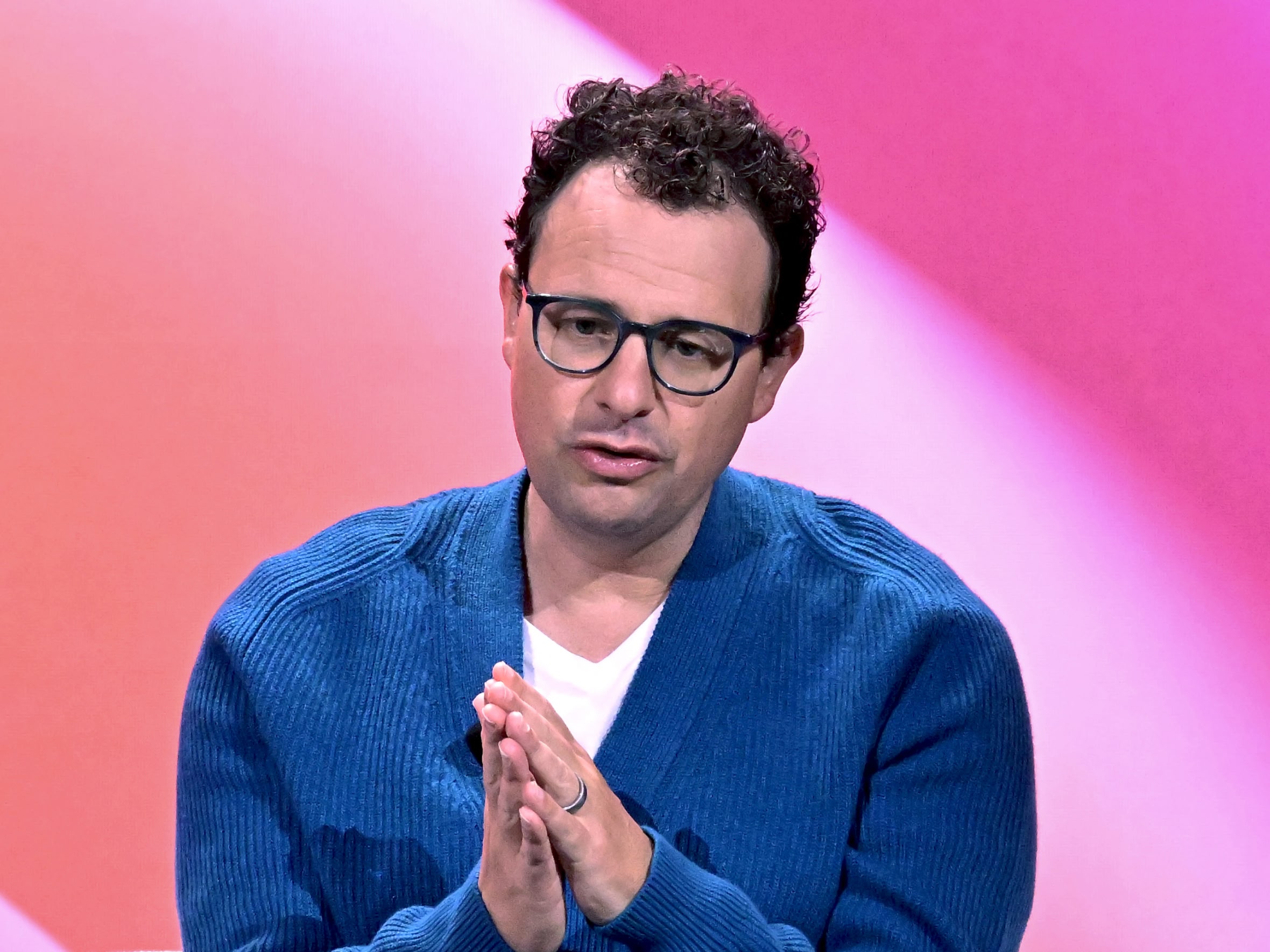
Anthropic’s Dario Amodei expresses concern: AI specialists are joining the company for money, not for ideas.
According to the CEO, the company has no plans to raise salaries even for the best employees.
Читайте также
Anthropic’s AI Handles Complex Multi-Stage Tasks
Anthropic was the first among big tech to unveil a new AI model. On September 1, the developer introduced the neural networks Claude Fable 5.1 and Claude Mythos 5.1. The company described the models as «the most advanced systems for programming and intellectual work.»
Developers stated that the updated models perform better on complex multi-step tasks:
- financial calculations,
- solving mathematical formulas,
- editing documents with multiple interrelated points.
The new models can accurately perform tasks at each stage of an assignment, the company reported.
Anthropic has also enhanced the capabilities of Fable and Mythos for cybersecurity. The developer claimed that the models can independently identify vulnerabilities in software. During tests, the neural network discovered the cause of a rare failure in the internal systems of the investment company Millennium Management, a problem that engineers and other AI models had been unable to explain for years.
Currently, Anthropic leads in the AI race: the developer’s models appear more robust than those from Google and OpenAI, according to The Wall Street Journal.
Claude Mythos Available Only to Verified Developers
Fable 5.1 and Mythos 5.1 represent one base model but differ in their level of restrictions. Fable is intended for a broad audience, while Mythos is available only to verified developers and companies, according to Anthropic.
Mythos was created for cybersecurity and to assist in biomedical research. Anthropic, in collaboration with the U.S. government, launched a separate program for scientists to utilize the model’s capabilities in biology: analyzing data, discovering patterns in genetics, aiding in cell research, and developing new medications.
Before release, both versions were tested for the potential use of AI in the development of chemical or biological weapons. Restrictions from previous versions were retained for the models.

OpenAI, Google, and Microsoft warn of a new wave of cyberattacks using AI—100 companies urged to bolster defenses.
Critical infrastructure—from hospitals to internet systems—are under the greatest threat.
Читайте также
OpenAI Prepares AI Model Astra—Launch Delayed
OpenAI also announced a new model—Astra. According to company representatives, the AI has reached a new level in cybersecurity: the neural network can identify previously unknown vulnerabilities on third-party websites and systems and determine potential exploitation scenarios.
Due to cybersecurity risks, developers had to postpone the release of Astra and continue working on the model’s safety, the company explained. OpenAI has not disclosed a release date, promising only to launch the neural network soon.
Google Released a Separate Version of Gemini for Cybersecurity
On September 2, Google introduced Gemini 3.8 Flash and a special version, Gemini 3.8 Flash Cyber. The latter is designed to find vulnerabilities on websites. After identifying issues in the system, the AI will suggest solutions to the user, the company reported.
Google clarified that the new Gemini is created for multi-stage problem-solving in programming, mathematics, and other specialized fields.
Following the release of this AI agent, Gemini 4 may be on the horizon—a flagship model from Google currently in development. According to sources from The Wall Street Journal, the system’s current results appear promising, but further training is required before the model’s launch.

Google released Gemini 3.7 Flash for coding work—model price halved until the end of 2026.
The AI model has also become more accurate in finance, law, and biological sciences.
Читайте также